How an Epoxy Garage Floor Job Runs
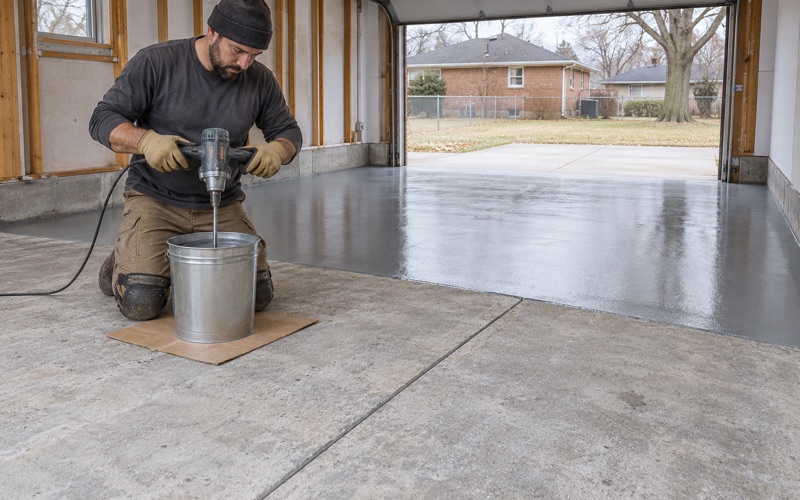
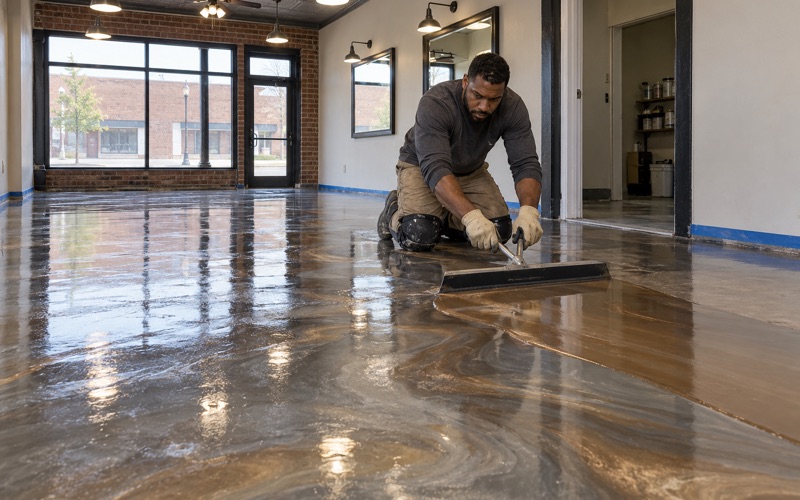
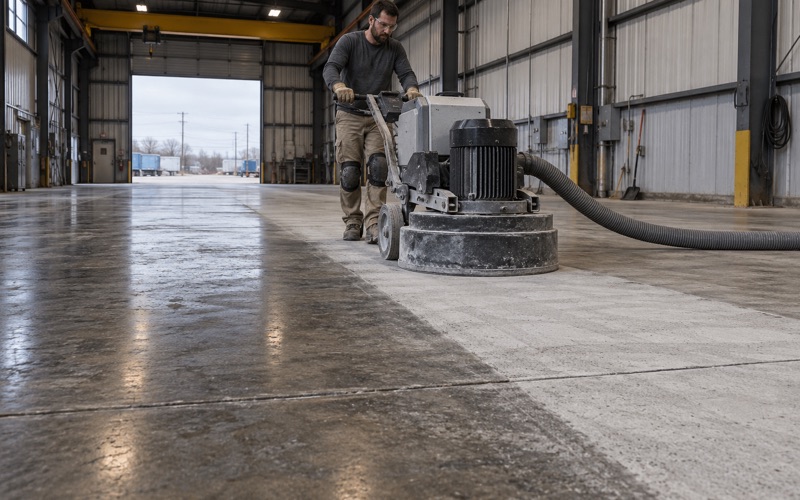
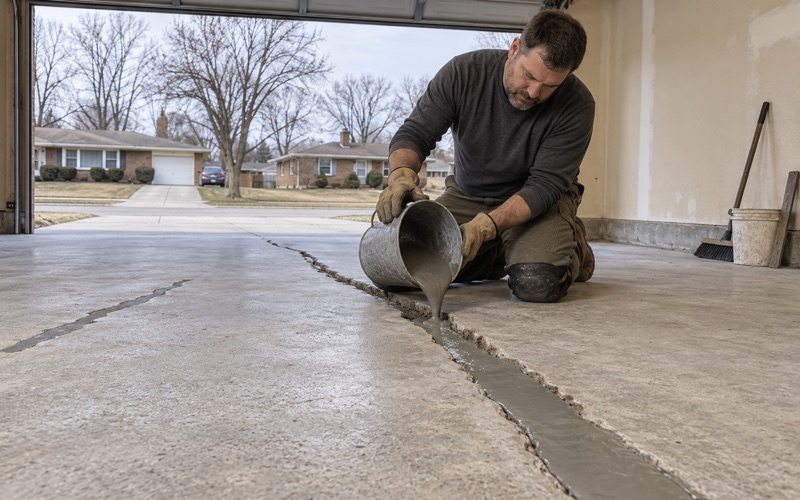
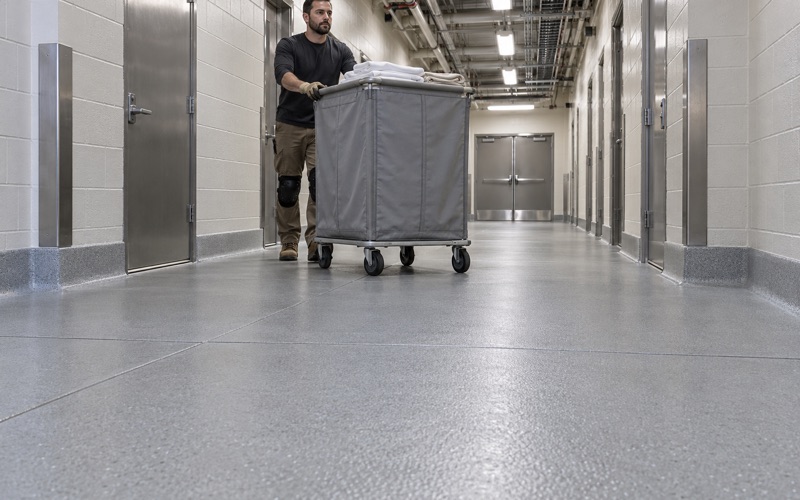
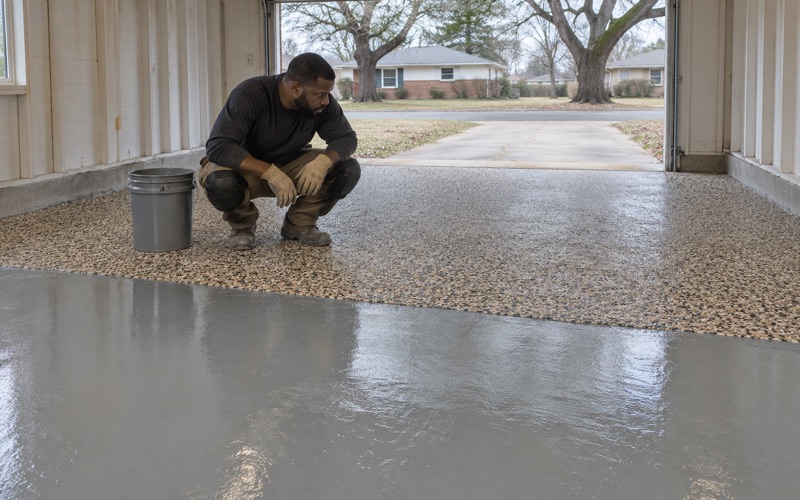
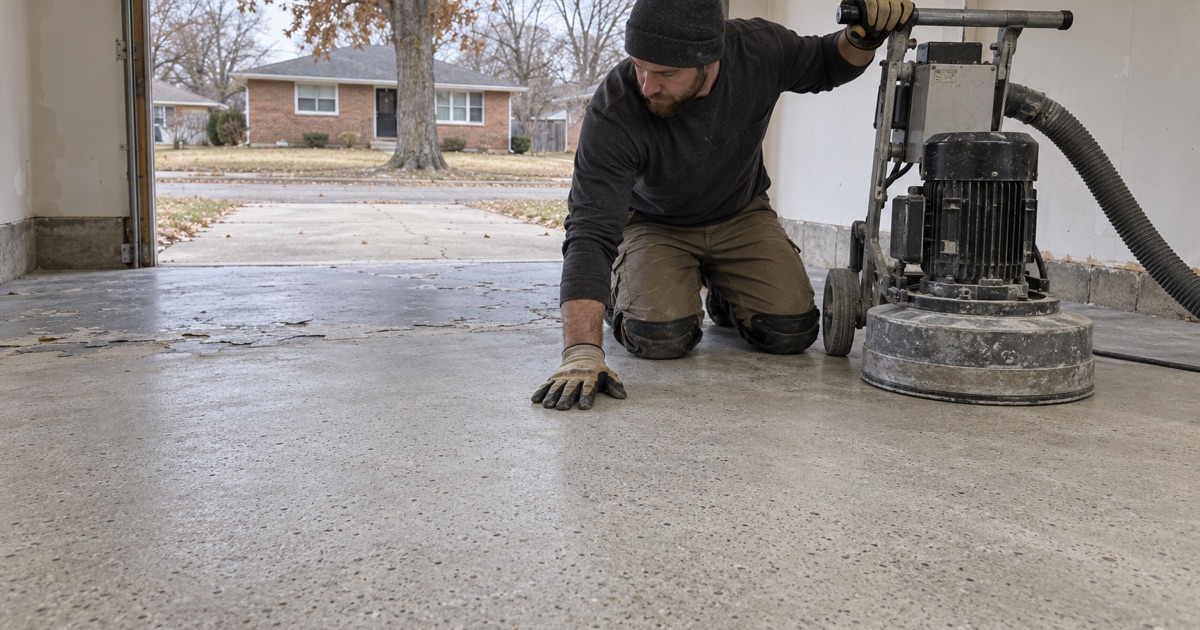
A garage job starts with a walk-through, a moisture test and a crack map, followed by a written proposal. On install days we grind the slab, vacuum it, fill cracks and spalls, then lay the base coat, broadcast and topcoat. You get a cure window for foot traffic and a later one for parking.
Attached Garages and Indoor Air
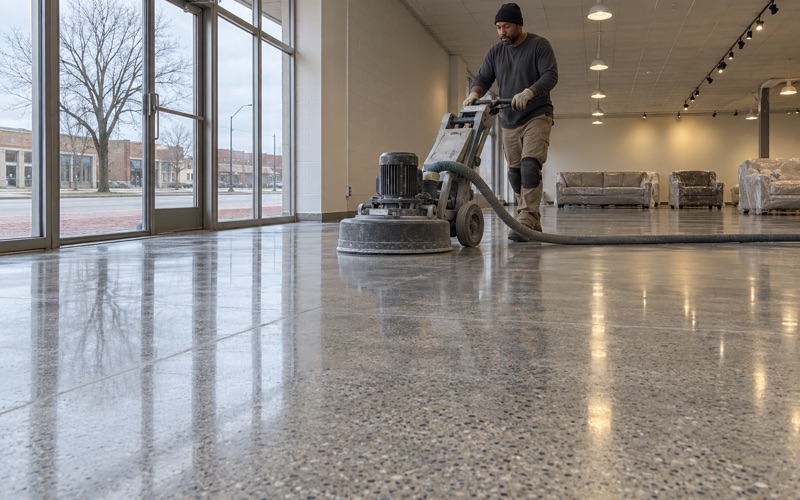
An attached garage shares a door and often ductwork with the house, so dust and odor control matter. Our grinders run tied to industrial vacuums that capture dust at the machine, we seal the house door, and we choose low-odor systems where the family is staying home during the work.
Unheated Detached Garages Through Winter
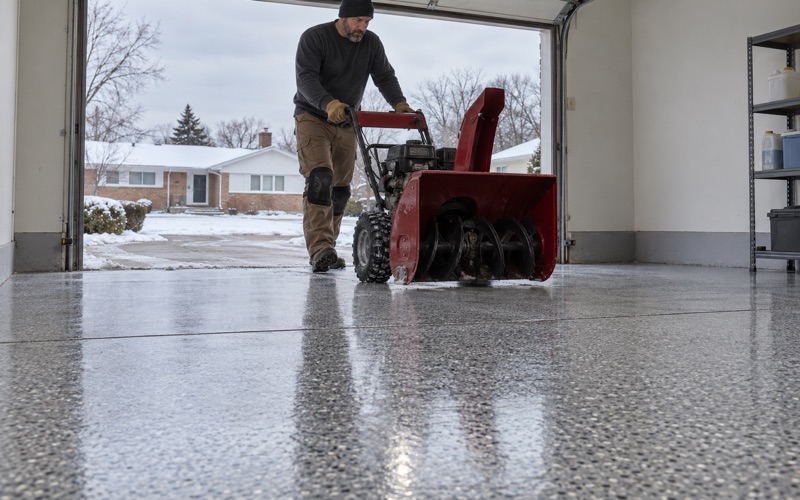
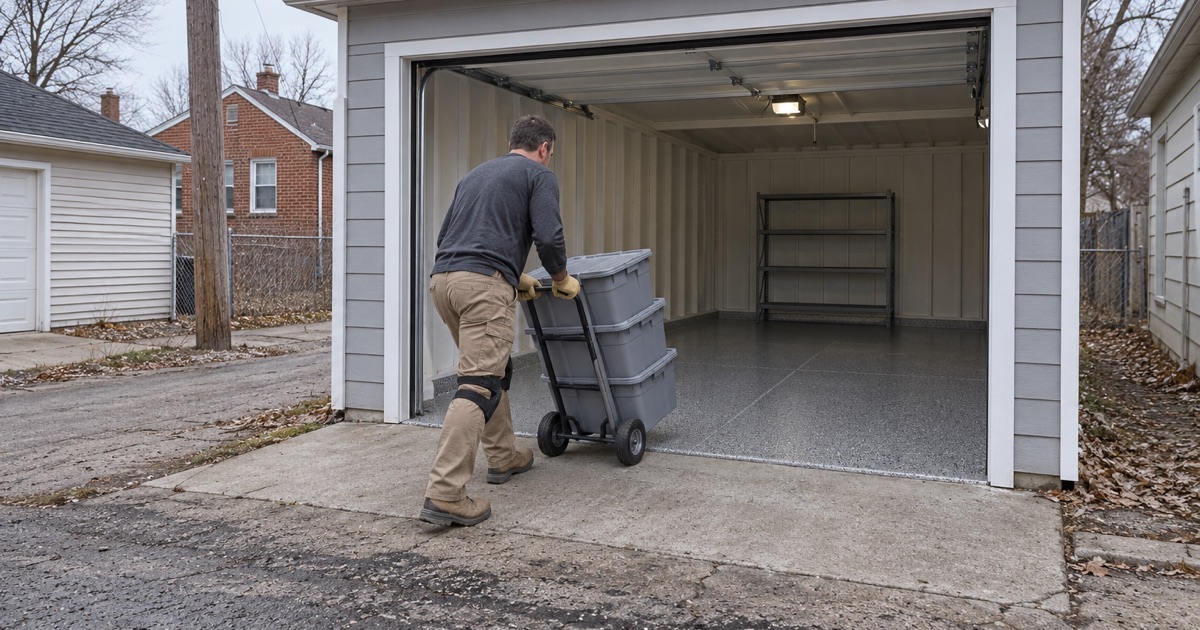
A detached garage near the lake can sit cold for months, and its slab swings with the weather. We pick coatings rated for that movement and for freeze cycles, and we schedule the install when the slab itself, not just the afternoon air, is warm enough for the resin to cure properly.
Moisture Testing a Garage Slab
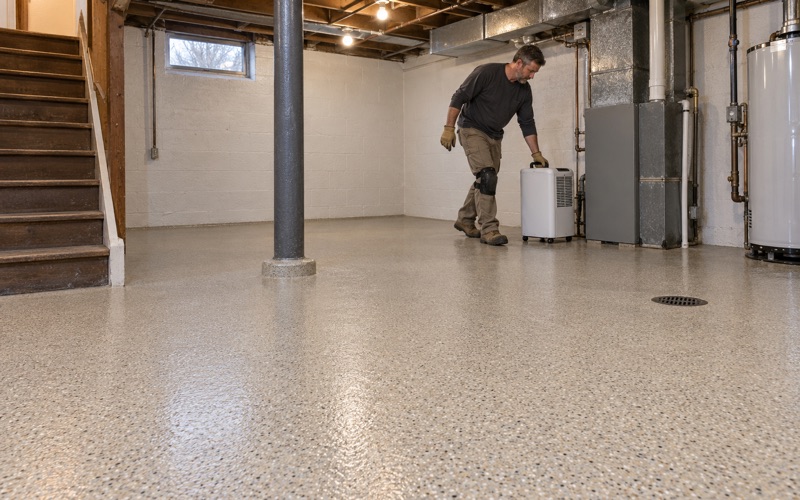
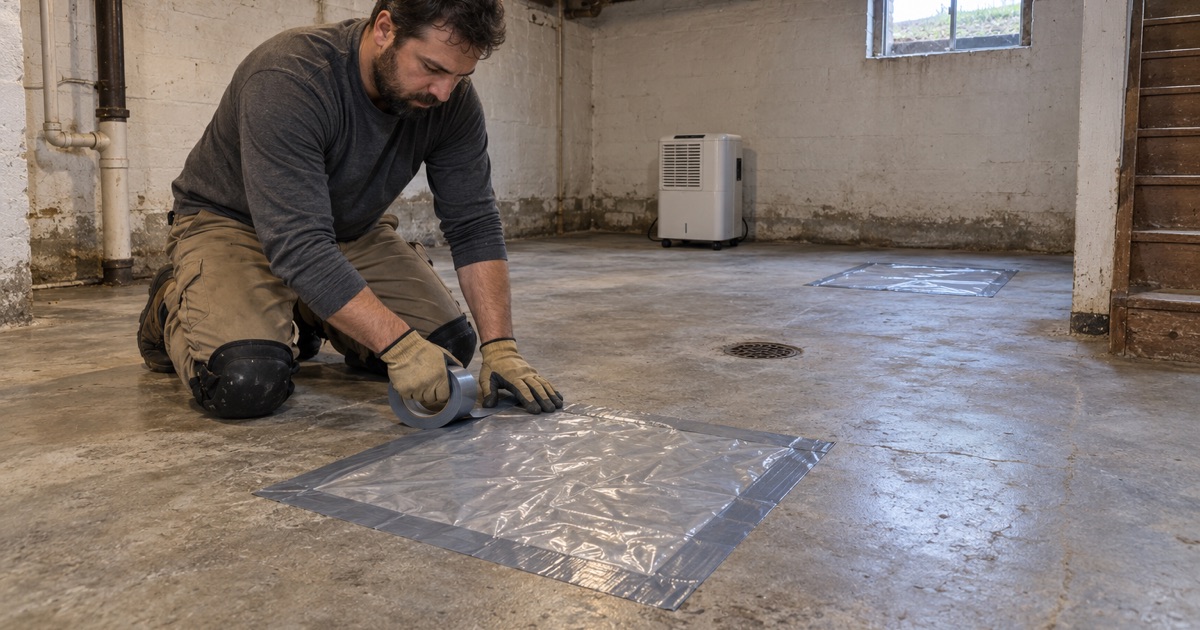
The residential code lets a garage slab skip the vapor retarder required under living space, so many garages have nothing below them to stop vapor. We test with ASTM F1869 calcium chloride kits or ASTM F2170 relative humidity probes, and an ASTM D4263 plastic sheet check where a quick read helps.
Cracks, Spalls and When to Replace a Slab
Hairline cracks, pitting and popped spalls are mapped before pricing, and most are ground out and filled with a rigid repair material before coating. When a slab has heaved, settled in sections or crumbled across large areas, we say so plainly, because no coating will hold a broken floor together.
What Winter Brine Does to Bare Concrete
Rock salt and calcium chloride dissolve into a brine that soaks into bare concrete, refreezes and flakes the surface away in scaling patches. A sealed, coated garage floor keeps that brine on top where it can be squeegeed out, which protects the slab as much as it improves the look.
How Cold Is Too Cold for Epoxy
Epoxy cures by chemical reaction, and a cold slab slows that reaction until the coating stays soft, clouds over or develops amine blush. We read slab temperature and the dew point spread at the surface, and when an unheated garage cannot hold a safe cure temperature, we recommend waiting for spring.
Hot Tire Pickup on Garage Coatings
A tire coming off a warm drive softens a thin coating, and when it cools on the floor it can bond and lift the film as the car pulls away. A ground slab, a 100% solids base coat and a hard polyaspartic topcoat give the bond and hardness that keep the coating in place.
Store-Bought Kits Against Professional Floors
Most hardware store kits are water-based epoxy rolled thin over an acid-etched slab, with a few decorative chips. A professional floor is ground first, built in multiple coats of high-solids resin, broadcast fully and topcoated, which is why it lasts years under tires instead of peeling at the first hot tire.
What an Epoxy Garage Floor Costs
The price moves mostly with prep, repair and system build: crack filling, old coating removal, moisture mitigation and full flake broadcast all add to it. Published ranges in the south Chicago suburbs run about $3 to $15 a square foot, and our proposal shows which line items set your number.
Coating Warranty Exclusions
Nearly every coating warranty excludes failures caused by moisture vapor coming up through the slab, and many exclude hydrostatic pressure, chemical spills and impact damage. We explain those exclusions before the job is sold, starting with moisture, so the warranty you sign matches what it actually covers.