
Gary Epoxy Flooring grinds and polishes concrete floors in Gary, IN, serving surrounding cities including Lake Station, Griffith, Highland, Hobart and East Chicago. After 20+ years of working slabs with diamond tooling, we know how to read a floor before the first pass: how hard the concrete is, how flat it sits, where the old patches and adhesive are hiding, and how much of the stone underneath it is worth bringing to the surface.
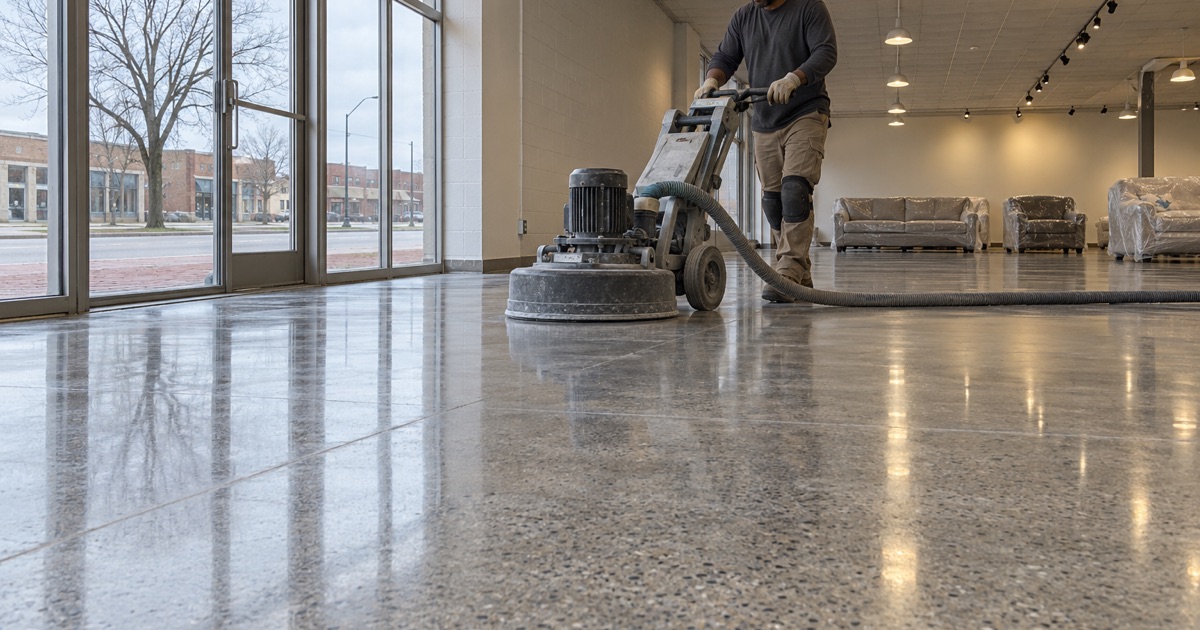
Polished concrete is not a coating. It is the slab itself, ground flat and refined through a sequence of progressively finer diamonds, hardened with a densifier and buffed until it reflects light. Because there is no film on top, there is nothing to peel, chip or lift when moisture moves through the slab, which makes it a practical floor for warehouses, shops and basements alike.
We write every polished concrete proposal around a test grind. That small section tells us how the slab will cut, how much aggregate will show, and what sheen it can realistically reach, so the proposal names an achievable finish rather than a showroom photo the slab cannot match.
Commercial Polished Concrete Floors
Warehouses and Distribution Floors
Large warehouse slabs are where polished concrete earns its keep. A densified, polished floor resists the abrasion of forklift tires and pallet jacks, sheds less dust than raw concrete, and reflects overhead lighting down into aisles that would otherwise stay dim.
We pair polishing with joint filling and repair, because forklift wheels chip unprotected joint edges quickly. Where heavy chemical exposure or oil is expected, we discuss whether a resin coating suits that area better, rather than polishing a floor that will soak up what lands on it.
Retail, Showroom and Office Floors
In retail stores, car showrooms and offices, polished concrete gives a clean, modern look with very little upkeep. We can stop at a satin sheen for a subtle look or continue to a high gloss, and we can grind deeper to expose more of the stone where a terrazzo-like finish suits the space.
These spaces usually need to stay open, so we phase the work by section and schedule grinding outside business hours. The dust-collecting grinders keep the air clean enough for neighboring areas to keep working.
Light Industrial and Maintenance Shops
Shops that see carts, rolling toolboxes and foot traffic but little standing oil are a good fit for a polished floor. The densified surface handles daily wear without a coating that might chip under a dropped part, and a burnish brings back the shine in high-traffic lanes.
Where welding slag, solvents or hydraulic fluid are routine, we usually recommend an epoxy or urethane system for that part of the shop and polish the cleaner areas around it.
Residential Polished Concrete Floors
Basements and Lower Levels
Basement slabs in older houses are often hidden under carpet, tile adhesive or paint. Once that is ground off, a polished finish turns the slab into a durable, easy-to-clean floor that will not trap moisture or mildew the way carpet can.
Because a polished floor has no film to delaminate, it tolerates moisture moving up through the slab better than most coatings. The moisture still matters for rugs and furniture placed on top, so we test the slab and explain what the readings mean for how the room will be used.
Garages and Workshops at Home
A polished garage slab looks clean and cuts down on concrete dust, but it is less protected from winter brine and oil than a coated floor. For Northwest Indiana garages that take road salt all season, we typically recommend a coating; for a heated workshop or hobby garage that sees little salt, polishing can be a strong, low-maintenance choice.
The tradeoff comes down to what lands on the floor. Calcium chloride brine and motor oil can etch or stain a densified slab if they sit, while they wipe off the top of a coated floor. We talk through how the garage is actually used, including how often a car comes in wet from a salted road, before recommending either finish.
Main-Floor Living Spaces
Some homes, especially slab-on-grade additions and converted commercial spaces, use polished concrete as the main living floor. We grind, polish and densify the slab, then apply a penetrating guard to help resist kitchen spills and pet accidents.
In living spaces the slab’s history shows more than it does in a warehouse. Old plumbing trenches, patched cracks and wall lines from earlier layouts can appear once the surface is ground, and we point those out on the test grind so you can decide whether they add character or call for a different finish level.
Choosing the Look of a Polished Floor
Cream, Salt-and-Pepper or Full Aggregate
The depth of the first grind decides how much aggregate shows. A cream finish stays near the surface and shows little stone, a salt-and-pepper finish exposes fine aggregate, and a full aggregate finish grinds deeper to reveal larger stone across the floor.
Each level costs more than the one before because it takes more grinding passes. A test grind shows what your slab holds, because older concrete sometimes reveals uneven stone that suits a cream or salt-and-pepper finish better.
Sheen From Matte to High Gloss
The final sheen depends on how fine the last diamond pass is. Matte and satin finishes hide scuffs and suit busy warehouses and garages, while high gloss reflects light and suits showrooms and offices that get regular care.
Sheen also changes how the floor handles light in a building. A high-gloss warehouse aisle bounces fixture light into racking and corners, which some facility managers value, while a satin finish keeps glare down in offices and retail spaces where people look across the floor all day.
Dyes, Saw Cuts and Borders
Penetrating dyes can color a polished floor without a coating, and saw-cut lines and borders can break a large slab into patterns or zones. We plan those details on the layout before grinding so that cuts align with control joints and walls.
Dyes work best on a slab that has been ground and refined to a uniform surface, because soft patches and old repairs absorb color differently. We test dye on a hidden section first, and we explain that dyed concrete keeps the natural variation of the slab rather than looking like a painted, uniform floor.
Our Step-by-Step Polished Concrete Floors Process
Step 1: Test Grind and Slab Review
We grind a small area, check hardness and flatness, map cracks, patches and old coatings, and confirm the finish your slab can reach. The written proposal names the exposure level, sheen and any repair work.
Step 2: Coarse Grinding and Repairs
Coarse metal-bond diamonds remove old coverings and flatten the slab, and cracks, spalls and joints are filled. All dust is captured at the machine by a vacuum.
This is the stage where the exposure level is set. Once the coarse diamonds have cut into the stone, a cream finish is no longer possible, so we confirm the target exposure on site before the deep passes begin and stop to show you the floor if the slab reveals something unexpected.
Step 3: Densifier and Refining Passes
A lithium silicate densifier soaks into the slab and hardens it, then resin-bond diamonds refine the surface through finer grits until it reaches the specified sheen. The densifier is what turns a soft, dusting slab into a surface that holds a polish.
Skipping grits is the most common shortcut in polishing, and it shows as swirl scratches once light hits the floor at an angle. We work through every step of the diamond sequence and check each pass under raking light before moving to the next, because scratches left at one grit only become more visible as the floor gets shinier.
Step 4: Guard and Final Burnish
A penetrating stain guard is applied and burnished into the floor. We leave simple care instructions so the shine lasts with routine dust mopping and a neutral cleaner.
- 20+ Years Coating Concrete
- Written Moisture Testing
- Free Estimates